

Improving BI Design System: Ensuring a cohesive, responsive, and accessible experience across all screen displays for BI’s products.
Context
Design System
B2C Product
Mobile Application
Web Platform
Role
Software Engineer Intern
Team
1 Content Manager
1 Design Manager
1 UX Engineer
Timeline
Jun 2025 - Dec 2025
Overview
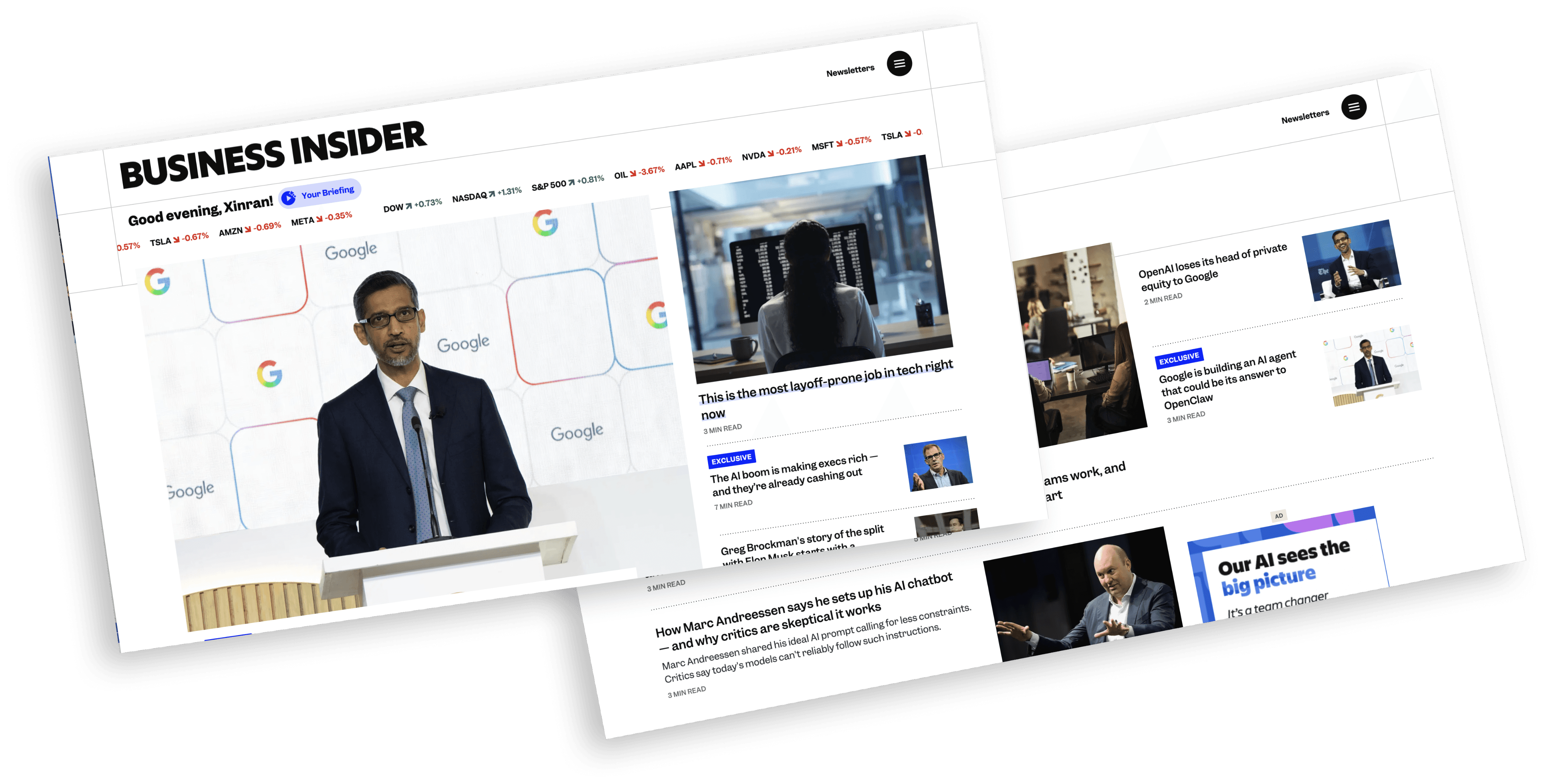
About the Company
Business Insider is one of the leading global digital media platforms, reaching over 200 million unique visitors per month worldwide.
As the company expands it's global footprint, it is transforming toward a more accessible, consistent, and responsive experience for both its broad subscriber base and its mobile-first audience.

With a strong emphasis on innovation, clarity of insight, and high-quality presentation, Business Insider’s UX team is embracing a more systematic approach to manage and scale the company’s design system—ensuring cohesive and brand-aligned component standards across platforms.
Problem
As Business Insider’s UX team expanded its component library and worked to maintain a consistent brand identity across its web platforms and applications, a new challenge emerged.

KEY Challenge
The team observed a growing shift in user behavior — more readers were engaging with content through mobile devices.
This evolution underscored the need to emphasize responsive design principles, ensuring that BI’s design system could adapt seamlessly across screen sizes while preserving accessibility, readability, and brand coherence.
How might we design responsive system components that maintain editorial integrity and readability across desktop, tablet, and mobile experiences?

My Contribution
During my internship at Business Insider, I developed and engineered over 10 production-ready design implementations that were deployed on the live website, contributing to high-traffic editorial experiences. My work included building adaptive cards, interactive header panels, and smooth transition animations using JavaScript, HTML/CSS, Svelte, and React. I focused on creating responsive, performant, and accessible components that function seamlessly across devices and screen sizes.
In addition to feature development, I managed and contributed to the company’s front-end design system repository on GitHub. I improved the organization and documentation of reusable components, ensuring they were clearly structured, well-documented, and easy for future teams to understand and extend. This helped streamline cross-team collaboration and reduced development overhead for subsequent projects.
Due to NDA, I am unable to share specific design files or source code. However, you can find my designs on the Business Insider website.
If you would like to learn more about my internship project, please feel free to reach out at easonxinranwang@gmail.com.
Reflection
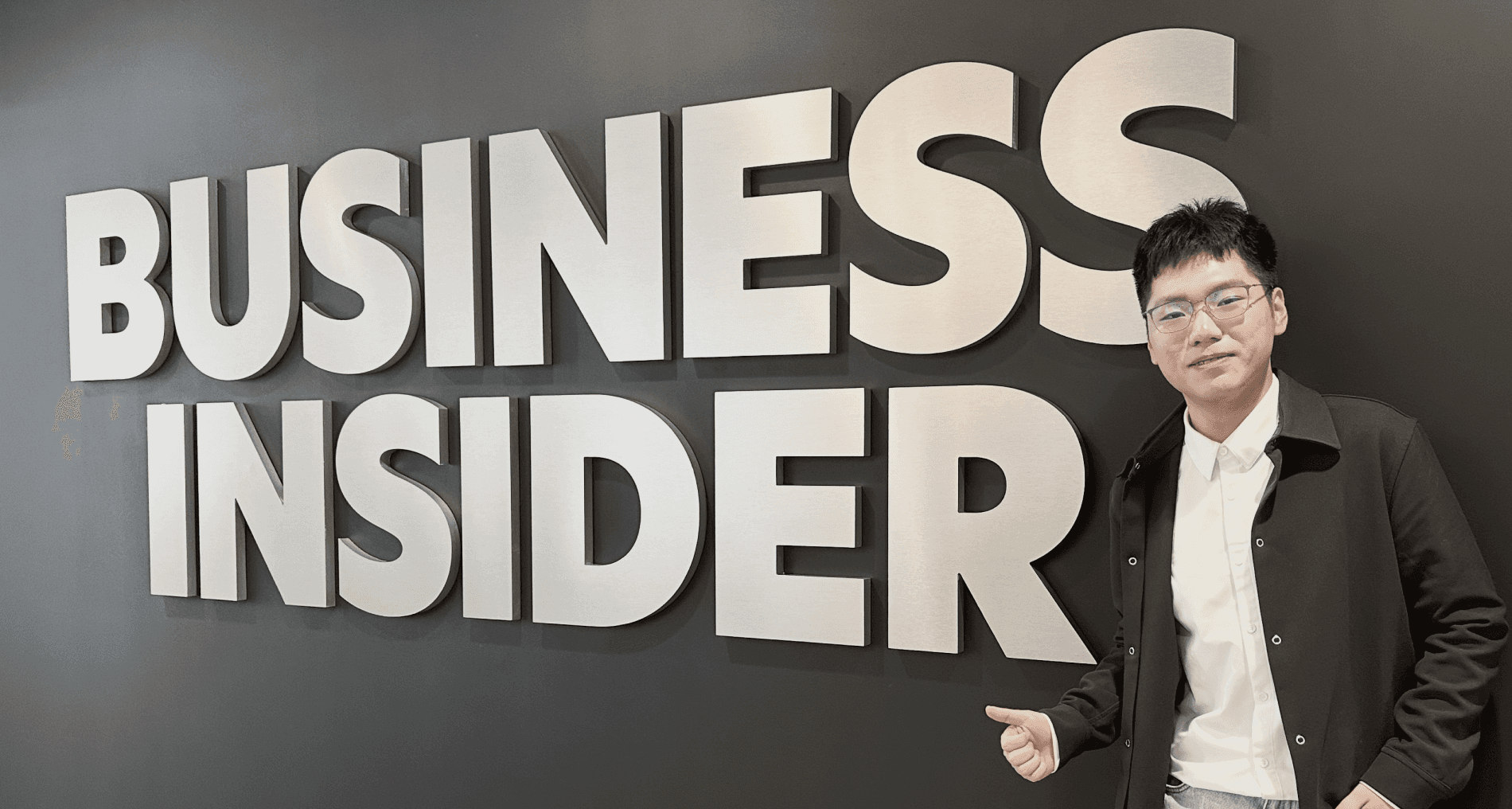
During my internship, I didn’t just build features—I learned how to bring ideas to life within real-world systems.
Designing within a System
I worked closely with the company’s design system to create interfaces that stay true to the brand while delivering a consistent and polished user experience.
Bridging Design and Engineering
I collaborated with designers and engineers to navigate feasibility, turning ideas into solutions that are not only visually appealing but also practical and scalable.
Building for Real Users
I engineered components that are responsive, accessible, and performant across different devices, screen sizes, and contexts.
Shipping End-to-End
I led the full pipeline—from Figma designs to GitHub version control, to AWS deployment, and finally into the company’s CMS powering live content.
Working with Frontend Frameworks
I built interactive, production-ready components using frameworks like Svelte and React, focusing on reusability, performance, and clean architecture.
Working with Frontend Frameworks
I built interactive, production-ready components using frameworks like Svelte and React, focusing on reusability, performance, and clean architecture.
Updated April 2026, made with love.